
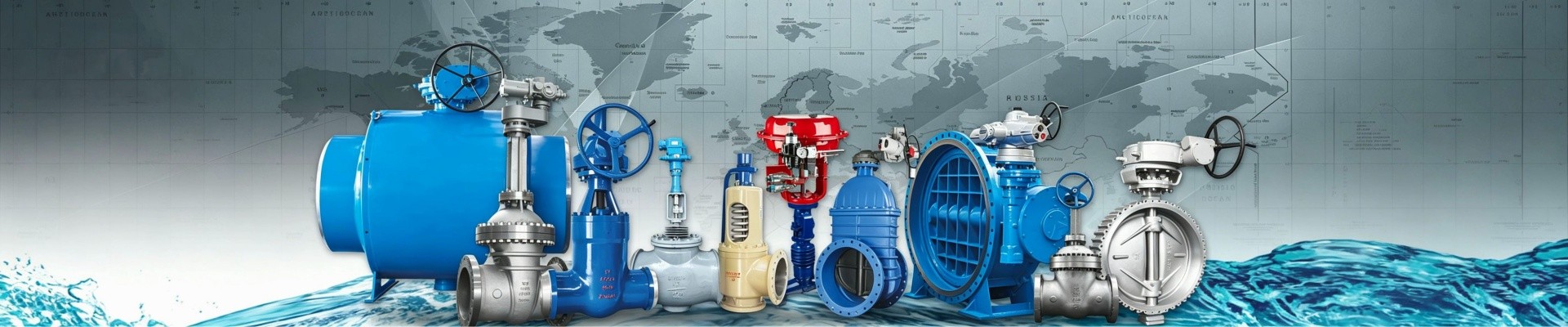
poster
HomeProductsBall Valve3 PIECE BALL VALVE
3 PIECE BALL VALVE

3 PIECE BALL VALVE

Structural Features

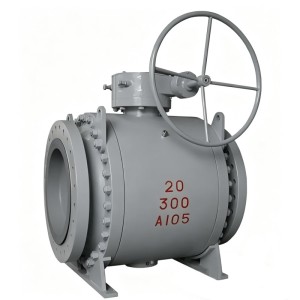
• The valve body is composed of three forged steel pieces bolted together.

• The valve core, seat, and seals are all housed in the middle valve body section.

• Common connection methods: threaded (NPT/BSP), welded, quick-connect.

• Generally small diameter: mainly DN6~DN100.

• Mostly floating ball structure, reliable sealing, and compact size.

Product Description

Working Principle

• The ball rotates 90° with the valve stem to achieve full open/full close.

• The floating ball automatically adheres to the valve seat under medium pressure, achieving a seal.

• Disassembly is simple: just loosen the bolts on both sides to remove the core assembly entirely; no pipe disassembly is required.


Main Advantages

1. Extremely Convenient Disassembly and Maintenance
No need to cut pipes or move the valve; simply replace the core assembly. Suitable for cleanroom, food, and chemical applications with frequent maintenance.

2. Excellent Sealing and Low Flow Resistance
Full-bore design, large flow rate, and virtually no pressure loss.

3. Good Pressure and Temperature Resistance
Forged steel material, pressure resistance up to PN16/PN40/Class 300, more reliable than ordinary cast iron valves.

4. Wide Range of Applications
Can be made with soft or hard seals, suitable for water, oil, gas, weak acids and alkalis, solvents, etc.

5. Compact Size and Moderate Cost
Small installation space, high cost-effectiveness.


Applicable Operating Conditions

• Chemical, water treatment, fine chemical, pharmaceutical, food industries

• Instrumentation, small-diameter pipelines, skid-mounted equipment

• Piping requiring frequent cleaning, maintenance, and seal replacement


Common Materials

• Valve body: 304 / 316L stainless steel

• Ball/stem: 304 / 316

• Seal: PTFE, reinforced PTFE

• Operating temperature: -20℃~200℃
Online Inquiry

Related Products

Forged Steel Ball Valve

Forged Steel Ball Valve

Key Features

• High-Strength Material: Forging process removes porosity and looseness, resulting in dense grains, high tensile strength, and superior wear resistance compared to cast steel.

• Reliable Sealing: Soft seal (reinforced PTFE/PPL) or hard seal (metal-to-metal), supporting double sealing, fireproof and anti-static.

• Stable Structure: Available in two-piece/three-piece flange connections, fixed ball or floating ball structure, and a split valve body for easy maintenance.

• Highly Efficient Opening and Closing: 90° rotation, low torque, fast opening and closing, suitable for frequent operation.

• Wide Temperature and Pressure Compatibility: Temperature range from -196℃ to 450℃, pressure rating from Class 150 to 1500.

Eccentric Hemispherical Valve

Eccentric Hemispherical Valve

Structure and Principle

• The valve core is hemispherical, with its rotation center eccentric to the valve body center.

• When open: The hemisphere disengages from the valve seat, resulting in no friction and low torque.

• When closed: The hemisphere presses against the valve seat, forming a line/surface seal.

• Typical structures: Side-mounted/Top-mounted, eccentric shaft, eccentric hemisphere.

Fixed Ball Valve

Fixed Ball Valve

Structural Features

• The valve core is a fixed shaft structure, positioned by bearings/sleeves at the top and bottom.

• The valve core itself does not move back and forth; sealing is achieved by the valve seat pressing against the valve core.

• It is a bidirectional sealing structure.

• Common connections: flange connection, welded connection.

Three-Way Ball Valve

Three-Way Ball Valve

Structural Features

• Valve body is a three-way structure with L- or T-shaped ports.

• The ball has an L-shaped or T-shaped channel.

• Mostly a floating ball structure; some large-diameter models are fixed ball.

• Common connections: threaded, flanged, welded, quick-connect.

• Actuation methods: manual, pneumatic, electric.

+86 19858780995

+86 19858780995

+86 19858780995

19858780995@163.com