poster
HomeProductsBall ValveEccentric Hemispherical Valve
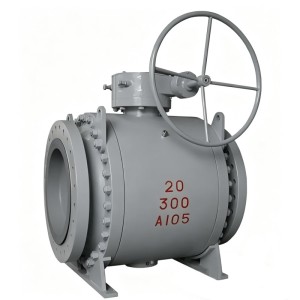
Eccentric Hemispherical Valve

Eccentric Hemispherical Valve

Structure and Principle

• The valve core is hemispherical, with its rotation center eccentric to the valve body center.

• When open: The hemisphere disengages from the valve seat, resulting in no friction and low torque.

• When closed: The hemisphere presses against the valve seat, forming a line/surface seal.

• Typical structures: Side-mounted/Top-mounted, eccentric shaft, eccentric hemisphere.

Product Description

Key Features

1. Excellent Sealing Performance: Hard seals achieve zero leakage, while soft seals provide even tighter sealing.

2. Wear-Free and Long Service Life: Opening and closing does not scrape the valve seat, making it more wear-resistant than ordinary ball valves.

3. Anti-Stuck and Self-Cleaning: The hemispherical rotation has a scraping effect, preventing mud, dust, and slurry from causing blockages.

4. Low Flow Resistance and Smooth Flow: The near-straight-through flow path reduces pressure drop, making it suitable for high flow rates.

5. Easy On/Off: The eccentric structure significantly reduces operating torque, suitable for both pneumatic and electric operation.


Common Parameters

• Nominal Diameter: DN25~DN1400

• Pressure Rating: PN10/PN16/PN25, Class150

• Temperature Range:

◦ Soft Seal: -20℃~180℃

◦ Hard Seal: Up to approximately 450℃

• Valve Body Material: Cast Steel WCB, Stainless Steel 304/316, Ductile Iron

• Sealing Material: Hard Alloy, Stainless Steel Welding, PTFE, etc.


Applicable Operating Conditions

• Wastewater treatment, mud, slurry, slag-water mixtures

• Fly ash, dust, flue gas, coal gas

• Chemical slurry, papermaking black liquor, particulate media

• Urban heating, water supply and drainage, circulating water systems

• Cut-off control requiring wear resistance, anti-clogging, and long service life


Applicable Industries


Municipal water supply and drainage, wastewater treatment, metallurgy and mining, power generation, fly ash, petrochemicals, papermaking, coal, cogeneration, etc.

Online Inquiry

Related Products

Pneumatic Floating Ball Valve

Pneumatic Floating Ball Valve

Structural Features

• The ball has no lower support shaft; it is held only by the valve seats at both ends, allowing for slight floating under medium pressure.

• The valve stem is top-mounted, connecting to the ball, and is only responsible for rotation, not bearing axial pressure.

• Double-sided sealing: When closed, the ball is pushed towards the outlet valve seat by the medium pressure, forming a self-tightening seal.

• Simple structure: The valve body, ball, valve seat, valve stem, and stuffing box have few components, making maintenance convenient.

Working Principle

• Opening: Rotate the valve stem 90°, aligning the ball's through-hole with the pipeline, allowing smooth media flow.

• Closing: Rotate the valve stem 90° in the opposite direction, aligning the ball's through-hole perpendicular to the flow path; media pressure pushes the ball tightly against the outlet valve seat, with a tighter seal at higher pressures.

Forged Steel Ball Valve

Forged Steel Ball Valve

Key Features

• High-Strength Material: Forging process removes porosity and looseness, resulting in dense grains, high tensile strength, and superior wear resistance compared to cast steel.

• Reliable Sealing: Soft seal (reinforced PTFE/PPL) or hard seal (metal-to-metal), supporting double sealing, fireproof and anti-static.

• Stable Structure: Available in two-piece/three-piece flange connections, fixed ball or floating ball structure, and a split valve body for easy maintenance.

• Highly Efficient Opening and Closing: 90° rotation, low torque, fast opening and closing, suitable for frequent operation.

• Wide Temperature and Pressure Compatibility: Temperature range from -196℃ to 450℃, pressure rating from Class 150 to 1500.

Ceramic Ball Valve

Ceramic Ball Valve

Key Features:

1. Superior Corrosion Resistance: Zirconia/alumina ceramics are resistant to almost all acid, alkali, and salt media, and do not rust or corrode.

2. Ultra-High Wear and Erosion Resistance: The high hardness of the ceramic means it experiences almost no wear under particulate media and slurry erosion, resulting in a lifespan far exceeding that of stainless steel.

3. Stable Sealing and Non-Stuck-Up: The smooth ceramic surface does not scale or adhere, ensuring stable switching torque and preventing jamming.

4. Zero Leakage: Precision ceramic mating seals enable bidirectional sealing.

5. No Media Contamination: The ceramic's high inertness prevents metal ion precipitation, making it suitable for high-purity and clean environments.

Disadvantages: Relatively brittle, not resistant to severe impacts or sudden temperature changes; careful selection and installation are required.

V-Type Ball Valve

V-Type Ball Valve

Structural Features

• V-shaped ball core: The hemispherical valve core has a V-shaped notch, which is the core component for regulation and shearing.

• Valve seat: It mates with the V-shaped notch to form a sealing surface. Soft seals (TFM, etc.) are suitable for clean media, while hard seals (welded or sprayed hard alloy) can be used in high-temperature, high-pressure, highly corrosive, or particulate-containing conditions.

Working Principle

• Regulation Function: As the valve core rotates, the overlap area between the V-shaped notch and the valve seat continuously changes, creating an equal percentage flow characteristic (opening degree and flow rate are logarithmically related), achieving high-precision control within the 30%-70% opening range.

• Shearing and Self-Cleaning: The V-shaped notch edge, in contact with the valve seat, cuts off fibers and small solid particles in the medium, preventing blockage; the relative movement between the valve core and valve seat during rotation scrapes away media residue on the sealing surface, achieving self-cleaning.

+86 19858780995

+86 19858780995

+86 19858780995

+86 19858780995

19858780995@163.com