poster
HomeProductsBall ValveFluorine-Lined Ball Valve
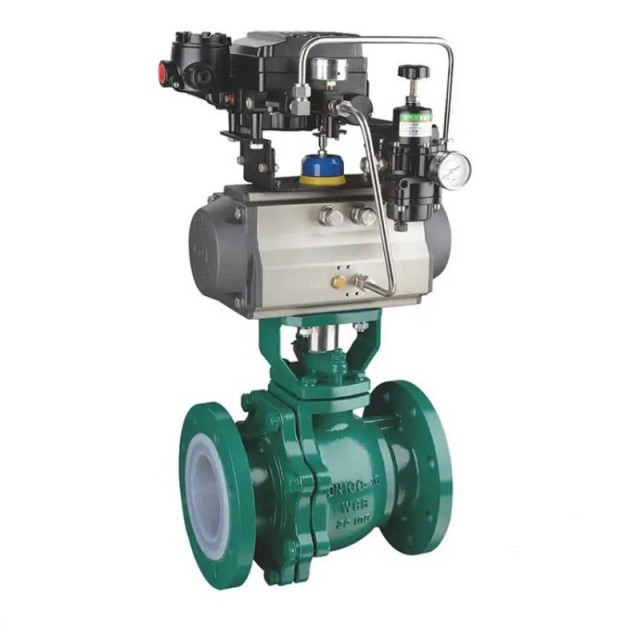
Fluorine-Lined Ball Valve

Fluorine-Lined Ball Valve

Structural Features

• Valve body is generally made of carbon steel or stainless steel, with the inner wall entirely lined with PTFE.

• Common lining materials: F4 (PTFE), F46, PFA, PO, etc.

• The ball is also PTFE-coated/lined for full-flow-channel corrosion protection.

• The structure is mostly a floating ball, with flange connections as the primary method.

• The sealing surface has inherent corrosion-resistant and anti-stick properties.

PRODUCT DETAIL

Working Principle

• 90° rotation of the ball achieves switching.

• The medium only contacts the fluoroplastic liner, preventing corrosion of the metal valve body.

• Smooth flow path, no scaling, no media adhesion.

• Soft-seal structure, achieving zero leakage.


Core Advantages

1. Superior Corrosion Resistance
Resistant to almost all acids, alkalis, and organic solvents, including concentrated sulfuric acid, liquid alkali, ketones, esters, aromatics, and alcohols.

2. Non-stick and Self-lubricating
Media does not easily adhere, resulting in low flow resistance and high flow rate.

3. Wide Applicable Temperature Range
Standard temperature range: -20℃ to 180℃; PFA can withstand even higher temperatures.

4. Excellent Sealing Performance
Suitable for toxic, harmful, highly corrosive, and volatile media.

5. High Cost-Effectiveness
Using fluoroplastic-lined carbon steel instead of expensive alloy valves results in lower costs.


Applicable Media

• Strong Acids: Sulfuric acid, hydrochloric acid, nitric acid, phosphoric acid

• Strong Alkalis: Liquid alkali, sodium hydroxide

• Strong Solvents: Acetone, MEK, xylene, benzene, various esters, alcohols

• Corrosive salt solutions, wastewater, chemical mixtures


Applicable Industries

• Chemicals, pesticides, dyes, electroplating, metallurgy

• Environmental protection, wastewater treatment, acid and alkali conveying systems

• Petrochemicals, fine chemicals, pharmaceuticals


Common Materials

• Connection: Flange connection

• Pressure: PN10, PN16, Class 150

• Lining: PTFE (F4), F46, PFA

• Valve Body: WCB carbon steel, 304/316 stainless steel

Online Inquiry

Related Products

Ceramic Ball Valve

Ceramic Ball Valve

Key Features:

1. Superior Corrosion Resistance: Zirconia/alumina ceramics are resistant to almost all acid, alkali, and salt media, and do not rust or corrode.

2. Ultra-High Wear and Erosion Resistance: The high hardness of the ceramic means it experiences almost no wear under particulate media and slurry erosion, resulting in a lifespan far exceeding that of stainless steel.

3. Stable Sealing and Non-Stuck-Up: The smooth ceramic surface does not scale or adhere, ensuring stable switching torque and preventing jamming.

4. Zero Leakage: Precision ceramic mating seals enable bidirectional sealing.

5. No Media Contamination: The ceramic's high inertness prevents metal ion precipitation, making it suitable for high-purity and clean environments.

Disadvantages: Relatively brittle, not resistant to severe impacts or sudden temperature changes; careful selection and installation are required.

Fluorine-Lined Ball Valve

Fluorine-Lined Ball Valve

Structural Features

• Valve body is generally made of carbon steel or stainless steel, with the inner wall entirely lined with PTFE.

• Common lining materials: F4 (PTFE), F46, PFA, PO, etc.

• The ball is also PTFE-coated/lined for full-flow-channel corrosion protection.

• The structure is mostly a floating ball, with flange connections as the primary method.

• The sealing surface has inherent corrosion-resistant and anti-stick properties.

Three-Way Ball Valve

Three-Way Ball Valve

Structural Features

• Valve body is a three-way structure with L- or T-shaped ports.

• The ball has an L-shaped or T-shaped channel.

• Mostly a floating ball structure; some large-diameter models are fixed ball.

• Common connections: threaded, flanged, welded, quick-connect.

• Actuation methods: manual, pneumatic, electric.

3 PIECE BALL VALVE

3 PIECE BALL VALVE

Structural Features

• The valve body is composed of three forged steel pieces bolted together.

• The valve core, seat, and seals are all housed in the middle valve body section.

• Common connection methods: threaded (NPT/BSP), welded, quick-connect.

• Generally small diameter: mainly DN6~DN100.

• Mostly floating ball structure, reliable sealing, and compact size.

+86 19858780995

+86 19858780995

+86 19858780995

+86 19858780995

19858780995@163.com