
poster
HomeProductsKnife Gate ValvesConcealed Plate Knife Gate Valve
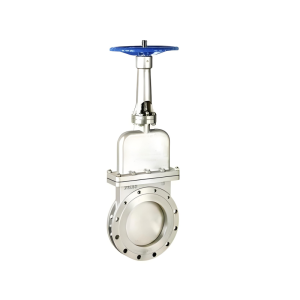
Concealed Plate Knife Gate Valve

Concealed Plate Knife Gate Valve

Structural Features

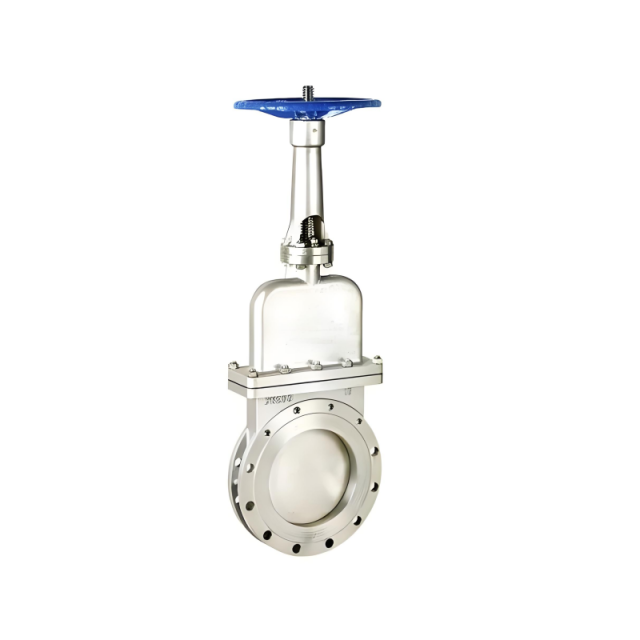
• Concealed valve stem: The drive screw is hidden inside the valve body/support, not exposed.

• The gate moves up and down within the valve cavity, resulting in a cleaner appearance.

• Generally a clamp-type connection, flange type is also available.

• Sealing is mostly soft seal (rubber) or hard metal seal.

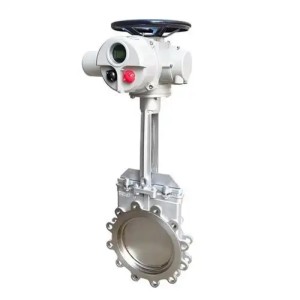
• Drive methods include manual, pneumatic, and electric.

Product Description

Advantages


• Small installation height required, ideal for space-constrained applications.

• The screw is not exposed, making it less prone to rust, impact damage, and debris entanglement.

• More durable in dusty and muddy environments, less likely to jam the screw.

• Simple structure, cheaper than through-type valves.

• Safe operation, preventing injury to personnel and equipment.


Applicable Media & Scenarios


• Sewage, sludge, mud, ash, dust, coal dust slurry

• Papermaking, wastewater treatment, mining, dust removal flues, slurry pipelines

• Confined spaces, underground pipe corridors, outdoor open-air environments, and high-dust environments
Online Inquiry

Related Products

Ceramic Knife Gate Valve

Ceramic Knife Gate Valve

Ceramic knife gate valves (also known as ceramic knife-type gate valves) are special valves that combine a knife gate valve with a high-performance ceramic seal. The core seal and flow components are made of toughened alumina/silicon carbide ceramic, while the valve body is typically made of carbon steel (WCB) or stainless steel (304/316L).

Structure and Principle

• The opening and closing element is a knife-edged gate, moving perpendicular to the media flow direction, cutting media containing particles and fibers through shearing.

• The gate rises and falls within a side guide groove, and the bottom lug tightly presses against the valve seat, eliminating cavities, slag accumulation, and jamming.

• The valve seat commonly uses a protective lip ceramic ring + O-ring to achieve a bidirectional hard seal, with a leakage level reaching ANSI Class VI.

Polyurethane Knife Gate Valve

Polyurethane Knife Gate Valve

Core Structure

• Valve Body: Ductile iron/WCB, fully lined with polyurethane (PU)

• Gate: Stainless steel (304/316/2205) + polyurethane coating

• Sealing: Polyurethane seat (soft seal)

• Connection: Wafer type / Flange type

• Drive: Manual, pneumatic, electric, bevel gear

Slurry Valve

Slurry Valve

Structural Features

• Mostly adopt a knife gate structure (knife-type slurry valve)

• Straight flow path with no dead angles, less prone to slurry accumulation and slag blockage

• Valve body, gate, and sealing surfaces are all treated with wear-resistant materials

• Common materials: polyurethane lining, wear-resistant alloy, ceramic, wear-resistant rubber

• Connections are mostly wafer type or flange type, predominantly for large diameters

Penetration-Type Knife Gate Valve (Two-Way Sealing)

Penetration-Type Knife Gate Valve (Two-Way Sealing)

Structural Features

• The gate is longer than the valve body, allowing it to completely penetrate the valve body during opening and closing.

• It has a guide bracket at the top and generally an outlet cover/discharge port at the bottom.

• The gate operates more stably, without deviation or bending.

• Mostly wafer or flange type, providing greater overall rigidity.

• Driven manually, pneumatically, or electrically.

+86 19858780995

+86 19858780995

+86 19858780995

+86 19858780995

19858780995@163.com