
poster
HomeProductsOther ValvesPressure Reducing Valve
Pressure Reducing Valve

Pressure Reducing Valve

Working Principle: Relying on the pressure of the medium itself + pressure difference sensed by a spring/diaphragm/piston:

1. High-pressure medium enters the valve;

2. The sensing element monitors the downstream pressure in real time;

3. High pressure → valve disc closes slightly, throttling and reducing pressure;

4. Low pressure → valve disc opens wider, replenishing and stabilizing pressure; Fully automatic adjustment, no external power required.

Product Description

Main Classifications and Characteristics


1. Piston-type Pressure Regulator

• Robust structure, high pressure resistance, and temperature difference resistance

• Moderate pressure regulation accuracy, suitable for steam, high temperature and high pressure conditions

• Commonly used: boiler steam, heating network


2. Diaphragm-type Pressure Regulator

• High sensitivity, good pressure regulation accuracy, and excellent sealing performance

• Suitable for tap water, compressed air, and low-pressure gases

• Simple maintenance, commonly used in civil and water supply and drainage systems


3. Pilot-operated Pressure Regulator

• Main valve + pilot control, large pressure reduction range, and extremely high pressure regulation accuracy

• First choice for large diameter, high flow, and high pressure conditions

• Widely used in industrial pipelines and centralized gas supply systems


4. Proportional Pressure Regulator

• Fixed pressure reduction ratio, simple structure, maintenance-free

• Commonly used in building water supply and drainage and fire water supply


Core Parameters


• Nominal Diameter: DN15~DN600

• Nominal Pressure: PN16, PN25, PN40, Class150/300

• Applicable Temperature: Ambient temperature ~ 350℃ (High-temperature resistant for steam)

• Valve Body Material: Cast iron, cast steel, 304/316L stainless steel, copper alloy

• Connection Method: Flange, threaded, welded


Main Advantages


1. Automatically maintains constant downstream pressure with minimal pressure fluctuations

2. Throttling and pressure reduction, protecting valves, instruments, heat exchangers, and pipelines

3. Reduces energy consumption and stabilizes production process conditions

4. Multiple models available, suitable for low-pressure, high-pressure, high-temperature, and gas/liquid scenarios


Application Conditions


• HVAC: Steam pipelines, pressure reduction and stabilization in heat exchange stations

• Water Supply and Drainage: Residential buildings, fire pipelines, industrial circulating water

• Pneumatic Systems: Air compressors, nitrogen, compressed air pipelines

• Chemical and Petrochemical Industries: Process pipelines, pressure reduction for corrosive fluids

• Energy Equipment: Boiler accessories, gas transmission pressure stabilization
Online Inquiry

Related Products

Steam Trap

Steam Trap

Definition and Function

A steam trap (or condensate trap) is a specialized automatic valve for steam systems. Its core functions are: Automatically discharging condensate, air, and non-condensable gases while strictly preventing steam leakage.

It eliminates steam waste, prevents water hammer and corrosion of pipes and equipment, and ensures heat exchange efficiency and system safety.

Working Principle
It utilizes the differences in density, temperature, phase change temperature difference, and flow state between steam and condensate to achieve automatic identification and opening/closing:

• Condensate, air → Automatically opens and discharges

• High-temperature steam → Automatically closes and locks to prevent steam leakage

Pressure Reducing Valve

Pressure Reducing Valve

Working Principle: Relying on the pressure of the medium itself + pressure difference sensed by a spring/diaphragm/piston:

1. High-pressure medium enters the valve;

2. The sensing element monitors the downstream pressure in real time;

3. High pressure → valve disc closes slightly, throttling and reducing pressure;

4. Low pressure → valve disc opens wider, replenishing and stabilizing pressure; Fully automatic adjustment, no external power required.

Discharge Valve

Discharge Valve

Main Parameters

• Nominal Pressure: PN6~PN25

• Nominal Diameter: DN25~DN200, complete range of diameters for reactors and tanks

• Operating Temperature: -20℃~+200℃, PTFE-lined version resistant to strong corrosion, stainless steel version resistant to medium and high temperatures

• Valve Body Material: Cast iron, 304/316L stainless steel, PTFE-lined, rubber-lined, etc.

• Operation Method: Manual, pneumatic, electric, hydraulic, suitable for automated operations

Structural Forms

1. Top-opening discharge valve: Valve plate opens upwards, no material residue, suitable for viscous, crystallizing, and easily sedimenting media.

2. Bottom-opening discharge valve: Valve plate opens downwards, fast discharge flow rate, good self-cleaning effect, thorough unloading.

3. PTFE-lined discharge valve: The entire valve is lined with fluoroplastic, resistant to strong acids and alkalis, corrosion-resistant, specially designed for chemical corrosion environments.

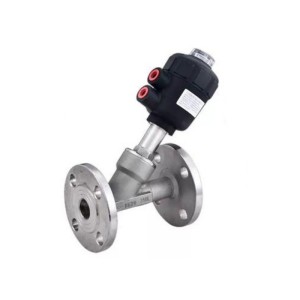
Pneumatic Angle Seat Valve

Pneumatic Angle Seat Valve

Main Parameters

• Nominal Pressure: PN16~PN40

• Nominal Diameter: DN15~DN100

• Operating Temperature: -10℃~+180℃, high-temperature version up to 220℃

• Control Air Supply: 0.4~0.6MPa

• Sealing Material: PTFE, high-temperature resistant seals, excellent sealing performance

• Valve Body Material: Primarily 304 and 316L stainless steel, strong corrosion resistance

+86 19858780995

+86 19858780995

+86 19858780995

+86 19858780995

19858780995@163.com