poster
HomeProductsBall ValveCeramic Ball Valve
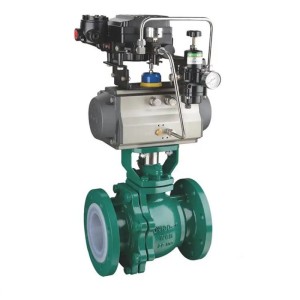
Ceramic Ball Valve

Ceramic Ball Valve

Key Features:

1. Superior Corrosion Resistance: Zirconia/alumina ceramics are resistant to almost all acid, alkali, and salt media, and do not rust or corrode.

2. Ultra-High Wear and Erosion Resistance: The high hardness of the ceramic means it experiences almost no wear under particulate media and slurry erosion, resulting in a lifespan far exceeding that of stainless steel.

3. Stable Sealing and Non-Stuck-Up: The smooth ceramic surface does not scale or adhere, ensuring stable switching torque and preventing jamming.

4. Zero Leakage: Precision ceramic mating seals enable bidirectional sealing.

5. No Media Contamination: The ceramic's high inertness prevents metal ion precipitation, making it suitable for high-purity and clean environments.

Disadvantages: Relatively brittle, not resistant to severe impacts or sudden temperature changes; careful selection and installation are required.

Product Description

Commonly Used Ceramic Materials

• Zirconia ceramic (ZrO₂): Better toughness, superior temperature resistance, and most widely used.

• Alumina ceramic (Al₂O₃): Lower cost, good wear and corrosion resistance.

• Valve core, seat, and ball are all ceramic structures; valve bodies are mostly carbon steel/stainless steel lined with ceramic.


Performance Parameters

• Nominal Diameter: DN15~DN200

• Pressure Rating: PN16, PN25, Class150

• Temperature Range:

◦ Standard: -20℃~250℃

◦ Special structures can reach approximately 300℃.

• Connection Methods: Flange, Wafer, Threaded

• Drive Methods: Manual, Pneumatic, Electric


Applicable Media

• Strong Acids and Bases: Sulfuric acid, hydrochloric acid, nitric acid, phosphoric acid, caustic soda, etc.

• Containing Solid Particles: Mineral slurry, coal slurry, slag slurry, fly ash, mortar

• High-Abrasion Gases: Dust, flue gas, dry particle pneumatic conveying. High-purity media: Electronics, pharmaceuticals, high-purity water treatment


Applicable industries:
• Chemicals, phosphate chemicals, titanium dioxide, hydrometallurgy
• Power generation desulfurization and denitrification, fly ash conveying
• Mining, papermaking, wastewater treatment, sludge conveying
• New energy, lithium battery slurry, high-purity fluid control

Online Inquiry

Related Products

Ceramic Ball Valve

Ceramic Ball Valve

Key Features:

1. Superior Corrosion Resistance: Zirconia/alumina ceramics are resistant to almost all acid, alkali, and salt media, and do not rust or corrode.

2. Ultra-High Wear and Erosion Resistance: The high hardness of the ceramic means it experiences almost no wear under particulate media and slurry erosion, resulting in a lifespan far exceeding that of stainless steel.

3. Stable Sealing and Non-Stuck-Up: The smooth ceramic surface does not scale or adhere, ensuring stable switching torque and preventing jamming.

4. Zero Leakage: Precision ceramic mating seals enable bidirectional sealing.

5. No Media Contamination: The ceramic's high inertness prevents metal ion precipitation, making it suitable for high-purity and clean environments.

Disadvantages: Relatively brittle, not resistant to severe impacts or sudden temperature changes; careful selection and installation are required.

Fluorine-Lined Ball Valve

Fluorine-Lined Ball Valve

Structural Features

• Valve body is generally made of carbon steel or stainless steel, with the inner wall entirely lined with PTFE.

• Common lining materials: F4 (PTFE), F46, PFA, PO, etc.

• The ball is also PTFE-coated/lined for full-flow-channel corrosion protection.

• The structure is mostly a floating ball, with flange connections as the primary method.

• The sealing surface has inherent corrosion-resistant and anti-stick properties.

V-Type Ball Valve

V-Type Ball Valve

Structural Features

• V-shaped ball core: The hemispherical valve core has a V-shaped notch, which is the core component for regulation and shearing.

• Valve seat: It mates with the V-shaped notch to form a sealing surface. Soft seals (TFM, etc.) are suitable for clean media, while hard seals (welded or sprayed hard alloy) can be used in high-temperature, high-pressure, highly corrosive, or particulate-containing conditions.

Working Principle

• Regulation Function: As the valve core rotates, the overlap area between the V-shaped notch and the valve seat continuously changes, creating an equal percentage flow characteristic (opening degree and flow rate are logarithmically related), achieving high-precision control within the 30%-70% opening range.

• Shearing and Self-Cleaning: The V-shaped notch edge, in contact with the valve seat, cuts off fibers and small solid particles in the medium, preventing blockage; the relative movement between the valve core and valve seat during rotation scrapes away media residue on the sealing surface, achieving self-cleaning.

Forged Steel Ball Valve

Forged Steel Ball Valve

Key Features

• High-Strength Material: Forging process removes porosity and looseness, resulting in dense grains, high tensile strength, and superior wear resistance compared to cast steel.

• Reliable Sealing: Soft seal (reinforced PTFE/PPL) or hard seal (metal-to-metal), supporting double sealing, fireproof and anti-static.

• Stable Structure: Available in two-piece/three-piece flange connections, fixed ball or floating ball structure, and a split valve body for easy maintenance.

• Highly Efficient Opening and Closing: 90° rotation, low torque, fast opening and closing, suitable for frequent operation.

• Wide Temperature and Pressure Compatibility: Temperature range from -196℃ to 450℃, pressure rating from Class 150 to 1500.

+86 19858780995

+86 19858780995

+86 19858780995

+86 19858780995

19858780995@163.com